Benefits of Learning Music for Mental Health and Overall Well-Being

– Aubrey Aloysius

“Where words fail, music speaks.” – Hans Christian Andersen

On October 10, 2025, the world observed World Mental Health Day, an occasion dedicated to raising awareness, compassion, and action for mental well-being. The World Health Organization’s theme for 2025 – “Mental health is a universal human right” – reminds us that emotional wellness is as vital as physical fitness. Yet, across homes, schools, and workplaces, stress, anxiety, burnout, mood swings, and depression continue to silently affect millions of people – from children and teenagers to parents, professionals, homemakers, and senior citizens.

In many parts of the world, especially in India, the topic of mental health still carries stigma. People rarely talk about their struggles until they become overwhelming. How can we, as a society, open this conversation and also do something practical to nurture our minds and hearts every day?

One answer lies in something profoundly human – music.

Learning music is not just about melodies and scales; it’s about mental fitness, emotional balance, and cognitive growth. Science and lived experience agree: music is medicine for the mind.
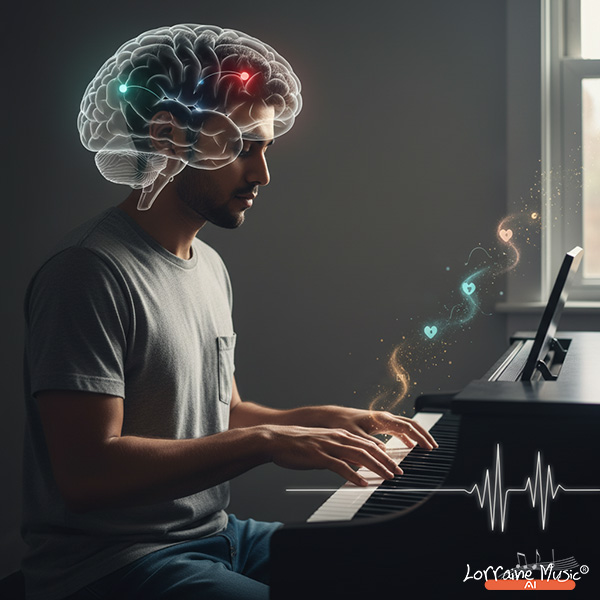
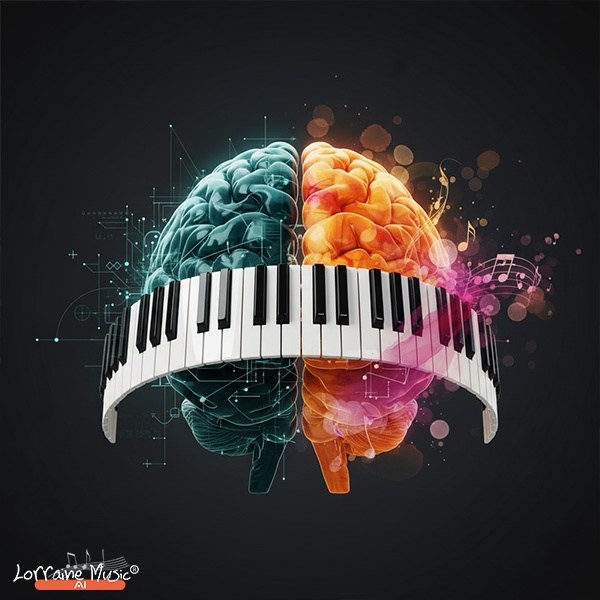
Brain regions activated by playing music for mental wellness

Music and the Mind: A Natural Connection

Music has been humanity’s emotional language for over 40,000 years. Whether it is the rhythmic beat of a drum, the hum of a lullaby, or the notes of a piano, music influences our brain chemistry, body rhythms, and mood.

When we listen to or play music, our brain releases dopamine, serotonin, and oxytocin – neurotransmitters responsible for happiness, bonding, and motivation. At the same time, stress hormones like cortisol decrease, creating a calm and focused state of mind.

But learning to play an instrument – such as the piano or keyboard – amplifies these effects even further. It engages multiple regions of the brain simultaneously: the auditory cortex (sound), motor cortex (movement), prefrontal cortex (planning), and the limbic system (emotion). This holistic activation acts like a “whole-brain workout” that strengthens neural connections and builds resilience.

A Harvard Health study points out that active music-making (as opposed to passive listening) stimulates neuroplasticity — the brain’s ability to reorganize itself by forming new connections. In simpler terms: playing an instrument keeps your brain young and your mood balanced.

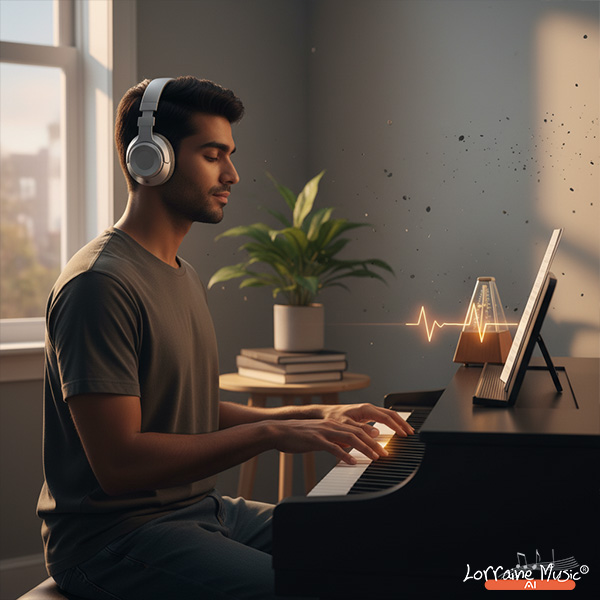
Playing music reduces stress and anxiety through mindful focus

1. Reduces Stress and Anxiety

In our fast-paced world, stress is inevitable, but chronic stress isn’t. Learning music offers a powerful way to manage it naturally.

When you focus on a musical task – like reading notes, coordinating both hands, or listening carefully to rhythm – your mind disengages from negative thoughts and everyday worries. This “flow state” lowers the body’s stress response and triggers relaxation.

A study published in Frontiers in Psychology showed that people who practiced piano for just 30 minutes a day, five times a week, reported significant drops in cortisol levels and anxiety symptoms within two months.

Playing an instrument is similar to meditation. It slows your breathing, aligns your heartbeat with rhythm, and centers your mind – a scientifically proven antidote to restlessness and overthinking.

Example:
After a long, tense day at work, sitting at the keyboard and practicing a simple melody can quiet the inner noise faster than scrolling through social media or watching TV.

2. Boosts Mood and Self-Esteem

Every small success in music learning, from mastering your first song to performing for friends – triggers a rush of endorphins, the body’s “feel-good” hormones. These moments of accomplishment build self-esteem and motivation, especially in children and teens who may struggle with confidence or attention.

Music also helps reframe negative self-talk. Instead of dwelling on “I can’t,” learners begin to internalize “I can, with practice.” This growth mindset extends beyond music to work, relationships, and life challenges.

Clinical studies from A Better Day Psychiatry reveal that engaging in structured music training leads to improved emotional regulation, fewer depressive episodes, and stronger self-identity in adolescents.

At LorraineMusic.ai, our students often describe their regular lessons as “therapy in disguise” – a joyful discipline that replaces frustration with flow and comparison with creativity.

Music learning builds self-esteem and emotional confidence in children and adults
Music enhances cognitive function and strengthens brain connections

3. Enhances Cognitive Function and Brain Plasticity

Playing music is one of the most demanding yet rewarding mental exercises. It requires:

  • Reading visual symbols (notes)
  • Coordinating fine motor skills (fingers, hands)
  • Listening intently to pitch and rhythm
  • Memorizing sequences
  • Anticipating musical phrasing
  • In doing so, you are not just entertaining yourself – you are training your brain.

MRI studies of pianists and violinists show that their corpus callosum (the bridge between the left and right hemispheres) is thicker than average, leading to faster communication between analytical and creative centers. This boosts problem-solving, focus, multitasking, and memory.

A 2014 Journal of the American Academy of Child and Adolescent Psychiatry study (Hudziak et al.) found that children who received regular music training had enhanced cortical thickness in brain regions associated with executive function and emotional control, the very areas often underdeveloped in those with anxiety or ADHD.

For adults and seniors, the benefits are equally striking. Research from Frontiers in Psychology (Seinfeld et al., 2013) revealed that older adults who took piano lessons for six months showed significant improvement in mood, attention, and overall quality of life.

4. Provides an Outlet for Emotional Expression

Many people find it difficult to put emotions into words, especially when dealing with grief, stress, or trauma. Music gives those feelings a safe channel for release.

When you play, you externalize what you feel internally. A slow ballad may express sadness; a lively rhythm might channel joy. This process of “emotional translation” allows the mind to process pain constructively, preventing emotional buildup.

Therapists call this “emotional regulation through creative engagement.” It is why music therapy is now widely used for patients with depression, PTSD, dementia, and autism – because it allows the subconscious to speak when words cannot.

At LorraineMusic.ai, we have witnessed how students – from young children to working professionals, use the piano or the keyboard to express feelings they could not articulate elsewhere. A few minutes of improvising melodies often brings visible calm, smiles, and even tears of relief.

Expressing emotions through music for mental healing
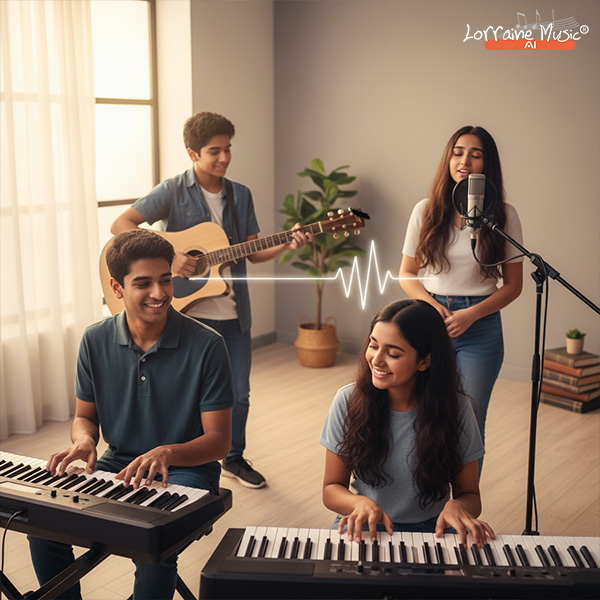
Music builds social connections and emotional support communities

5. Fosters Social Connection and Belonging

Mental health thrives on connection – and music creates it effortlessly. When learners join group classes, ensembles, or online communities, they form bonds based on shared passion rather than pressure. This sense of belonging combats loneliness and isolation – two major contributors to depression.

Making music together triggers oxytocin release, fostering trust and empathy. Group singing or piano duets have been shown to synchronize heart rates among participants – literally aligning people on a biological level.

The communal joy of performing together builds friendships, accountability, and emotional safety – all critical for mental wellness in today’s fragmented world.

6. Encourages Mindfulness and Focus

Music learning is inherently mindful. You must stay in the present moment, listening deeply, watching your fingers, feeling rhythm flow through your body. This state of awareness mirrors meditation practices that promote calm and concentration.

For people struggling with attention issues or chronic anxiety, music becomes a mental anchor. It draws wandering thoughts into structured rhythm and melody. Over time, learners report enhanced focus, patience, and presence in daily life.

Research from the University of Zurich suggests that musical training strengthens the prefrontal cortex, the brain’s center for attention, impulse control, and decision-making. That is why musicians often show improved academic and professional performance too.

Mindful piano learning improves focus and attention

7. Builds Resilience and Emotional Intelligence

The journey of learning music is filled with challenges. missed notes, slow progress, the discipline of daily practice. Yet, these challenges teach persistence, patience, and adaptability – the very traits that define resilience.

By interpreting emotions through sound, learners also develop emotional intelligence (EQ), the ability to understand and respond to others’ feelings. High EQ is strongly correlated with better relationships, leadership, and stress management.

In children, these lessons in empathy and perseverance shape emotional maturity for life. In adults, they reignite curiosity and creativity that often fade under routine.

8. Music Across Ages: A Lifelong Wellness Companion

  • For Children:
    Music learning strengthens memory, discipline, and self-expression. It helps anxious or introverted kids gain confidence and emotional balance.
  • For Teenagers:
    Music offers a healthy escape from peer pressure, digital overload, and emotional turbulence. It enhances self-esteem and provides purpose.
  • For Working Professionals:
    It is a proven antidote to burnout. Just 20 minutes of playing a keyboard can shift your mood and improve clarity before or after work.
  • For Homemakers:
    It creates mindful “me time,” reduces monotony, and provides personal joy that spills into family harmony.
  • For Senior Citizens:
    Music keeps the brain sharp and heart happy. Studies show it delays cognitive decline and fosters emotional vitality, even improving memory in those with mild dementia.
Music learning benefits all ages for lifelong mental well-being
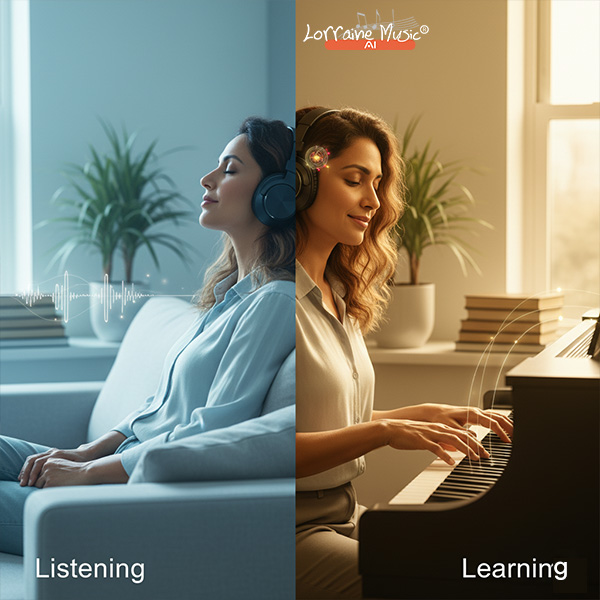
Listening vs learning music - active engagement boosts brain health

9. Listening vs. Learning: Why Active Participation Matters

Listening to music is wonderful, it uplifts, relaxes, and even heals. But learning to make music multiplies those benefits.

Listening activates auditory pathways, while playing activates motor, sensory, visual, and emotional pathways simultaneously. Think of it like passive walking versus full-body exercise, both help, but one transforms you faster.

As one neurologist put it, “Playing an instrument is like fireworks for the brain.” Even a few months of learning piano or guitar can create measurable changes in brain volume, connectivity, and emotional stability.

The earlier you start, the stronger the impact – but it is never too late to begin. Adults who take up an instrument later in life still experience substantial cognitive and emotional benefits.

10. How to Get Started: Music for Your Mind

Learning music doesn’t have to be intimidating. Start small, stay consistent, and enjoy the process.
Step 1: Choose Your Instrument
The piano or keyboard is ideal for beginners. It provides visual clarity (white and black keys), logical structure, and full-body engagement.

Step 2: Take Guided Lessons
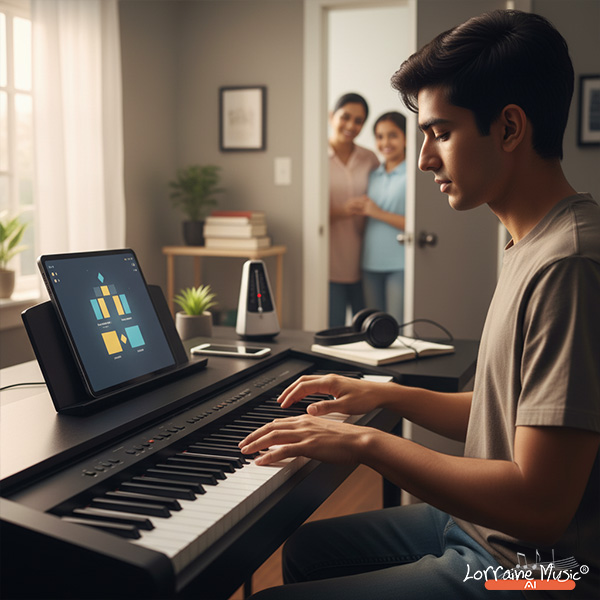
Join a structured program that nurtures both skill and creativity. Platforms like LorraineMusic.ai offer AI-powered, asynchronous learning, allowing you to learn at your own pace, from your home, on your schedule.

Step 3: Practice Mindfully
Focus on the journey, not perfection. Even 15–20 minutes daily brings transformation. Think of it as “mental gym time” — an investment in emotional fitness.

Step 4: Connect with Others
Share your progress, join jam sessions, or play for family and friends. Connection magnifies joy and motivation.

Step 5: Track How You Feel
Keep a small journal or audio log. Notice how your mood, focus, or sleep improves over time – proof that music is working its quiet magic.

LorraineMusic.ai AI-powered piano learning platform for beginners

Music for Global Mental Health: A Shared Responsibility

As WHO emphasizes, mental health is everyone’s business. We need collective action – in schools, workplaces, and homes, to create environments that support emotional well-being.

Integrating music education into daily life is one of the most joyful, cost-effective, and sustainable ways to achieve this. It can be practiced anywhere, at any age, without stigma or side effects.

At LorraineMusic.ai, we believe in “Music for Life.” Through our programs aligned with the National Education Policy (NEP-2020) and Music for Wellness Initiatives, we are helping children, youth, and adults discover peace, creativity, and purpose, one note at a time.

Let the Music Heal You

Mental health is not only about treating illness – it is about nurturing wellness, joy, and balance every day. Music gives us that, a universal rhythm that brings harmony to our thoughts, emotions, and lives.

Whether you are a child discovering your first melody, a student managing pressure, a working professional seeking calm after a busy day, or a senior rekindling long-lost joy, learning music reconnects you with your truest self. Each note you play is a step toward inner peace, focus, and happiness.

Begin your journey today.

Start learning to play the piano, at your own pace, in your own space – with LorraineMusic.ai. Let our AI-powered music learning platform guide you gently, joyfully, and scientifically toward better mental health, emotional balance, and lifelong well-being.

Because when you learn music, you’re not just training your fingers – you’re healing your mind and heart.

Your Dream. Your Pace. Your Piano.

References

  1. Hudziak JJ, Albaugh MD, Ducharme S, et al. Cortical thickness maturation and duration of music training: health-promoting activities shape brain development. J Am Acad Child Adolesc Psychiatry. 2014.
  2. Herdener M, Esposito F, di Salle F, et al. Musical training induces functional plasticity in human hippocampus. J Neurosci. 2010.
  3. Seinfeld S, Figueroa H, Ortiz-Gil J, Sanchez-Vives MV. Effects of music learning and piano practice on cognitive function, mood, and quality of life in older adults. Front Psychol. 2013.
  4. WHO: World Mental Health Day 2025

Aubrey Aloysius: Co-Founder, LorraineMusic.ai & Founder Trustee, LAMP Trust | Charter Member, TiE – The Indus Entrepreneurs – Global, Mumbai